Lancelot "Capability" Brown (1715-1783) is noted as both a gardener and architect. His landscape gardens quickly became highly prestigious and fashionable. Brown's habit of discussing the 'capabilities of improvement' of a property earned him the nick name he's best known by. Like Humphry Repton, he rejected the formal geometric style of gardening for a more natural approach. The aristocracy sought a private and peaceful "Arcadian" world. In and age without planning regulations anything was possible. He is credited with designing more than a hundred landscaped parks and his client list includes five Prime Ministers and more than a dozen dukes.
Brown was involved in the design of Rose Hill when Rose Fuller, Jack Fuller's Uncle, owned it in and lived there in 1763. It is unclear how many of Brown's recommendations were implemented at the time. Brown's son Lancelot, known as Capey, married Jack Fuller's sister Frances Fuller at Lausanne, Switzerland in 1788. They had no children.
One of the most magnificent unspoiled examples of Brown's genius is Petworth Park, Sussex. Designed in the 1750s, this 700 acre park is home to the largest and oldest herd of fallow deer in England. George O'Brien Wyndham, 3rd Earl of Egremont, was a great patron of the arts and J.M.W.Turner had a studio at Petworth House for several years.
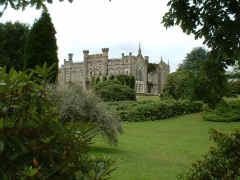
The impressive gardens of Sheffield Park, Sussex are the legacy of both Brown and Repton. This internationally renowned example of landscape architecture is noted for its stunning lakes, cascades and waterfalls. John Baker Holroyd, 1st Earl of Sheffield was in the Sussex Yeomanry Cavalry with Jack Fuller.
Not all of the changes implemented under this new approach to gardening are seen as positive. Many decry the destruction of the grand formal gardens of an earlier era.
"The Caroline Garden at Wilton must symbolize the thousands of formal gardens swept away by the fashion for the new landscape style. Here 'Capability' Brown emerges as the vandal, for he destroyed the three greatest Baroque gardens in England; Longleat House in 1757, and Chatsworth and Blenheim in 1760. Parterres, statues, canals, fountains, topiary, stately avenues and walks were cut down before the scythe of the 'improver' ", Lost Treasures of Britain: five centuries of creation and destruction by Roy Strong, p. 129.
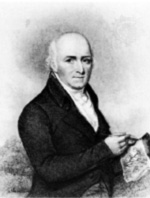
Humphry Repton (1752-1818), the son of a Suffolk exciseman, worked in a number of fields until he found success in landscape design. He is credited with inventing the term "landscape gardening" in order to express his theory that the art requires, "the united powers of the landscape painter and the practical gardener ". One of his basic tenets was that the natural site should set the tone for its landscaping. Soon Repton's work in London and on country estates attracted notice.
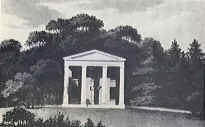
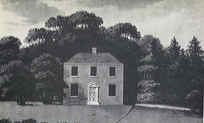
Once a commission was accepted, he would stay at the estate for a couple of days to survey the property and make notes. During his initial visit to Rose Hill, on March 12 1806, the ground was blanketed by snow. Repton returned in June of that year to present his client, Jack Fuller, with a leather bound "Red Book", a practice for which he became well known. One of the interesting features of these books are illustrations he called "slides". Here he devised a folded flap (or in some cases flaps) as an overlay which would allow clients to see before and after pictures of Repton's proposals for their property.
Repton had grand plans for Rose Hill which were ultimately rejected by Fuller. The "Red Book for Rose Hill" is preserved in the Bodleian Library in Oxford.
Repton suffered an unfortunate accident in 1811 when his carriage tipped over and he sustained injuries to his back that left him confined to a wheelchair. His commissions increasingly became the responsibility of his two sons George Stanley and John Adey Repton.
Repton authored several articles on gardening for the Linnean Society, and wrote five books on his gardening philosophy and practice, including Sketches and Hints on Landscape Gardening (1794) and An Inquiry into the Changes of Taste in Landscape Gardening (1806).
He died in 1818 and is buried in the churchyard of Aylsham, Norfolk.